I'm awful at recalling specific details from yesterday, let alone this past year...so I decided to do my own sort of review of 2011 by summing it up into the few months that was the Bruins playoff run and Stanley Cup championship. Instead of picking out individual highlights, I decided to let those beautiful "History Will Be Made" commercials from the playoffs sum it all up for me. I have posted in chronological order every single Bruins "History" commercial from the April-June 2011 months. Every single video gave me the chills, and I gotta be honest...I am totally tearing up and crying some tears of joy in reliving it. Thank you for these commercials, NHL, but most of all...thank you for what you accomplished in 2011, Boston Bruins. Here's to doing it again in 2012.
Get the duck boats ready...
Showing posts with label special. Show all posts
Sunday, January 1, 2012
Saturday, December 24, 2011
15 Reasons the Bruins Would Make the Best Team to Follow on HBO 24/7
HBO's 24/7 Road to the Winter Classic is definitely great for hockey, and despite the fact that so far it has exclusively featured teams that I hate, it is still very interesting to watch. This year seems to be lacking in true entertainment value outside of Ilya Bryzgalov being hilarious or Tortorella being pretty awesome. Even watching Lundqvist rock out with John McEnroe wasn't that entertaining to me. Perhaps it's just the director this year, or there just isn't that much good material, but mostly I think it's just the forced and manufactured "rivalry" between the two teams plus the lack of real personality or character on either team. I am almost positive that this is pure bias in what I'm about to say, but I think that the Bruins would be hands down the best team in the NHL to watch on 24/7. I think many agree with me without me having to lay out the reasons, but just in case, here are the first 15 things I could think of:
Monday, December 19, 2011
Did Shanahan Make the Right Call Suspending Lucic for 1 Game?
I have to say I was surprised when I heard that Lucic got suspended. I didn't think much of the hit when it happened because I, as usual, tend to just agree with what the NESN analysists say, and they all seemed to agree that the hit was borderline, but not suspension-worthy. If this was any other player, the hit probably wouldn't be suspension-worthy either. As Shanahan says in the video, Lucic's frequent penalties, past suspension (2009) and fines (last year), and overall style of play that has built up quite a reputation among the league played a big factor in determining whether or not to suspend Lucic. The fact that he narrowly escaped suspension just a few weeks ago for the hit on Miller probably played a pretty big role, too.
Wednesday, December 14, 2011
The Shootout Solution to Ties, Needs a Solution
This was written shortly after the infuriating shootout loss to Detroit that broke the Bruins winning streak...
After losing the entire 2004-2005 NHL season to a lockout, the league returned for the 2005-2006 season with dozens of new rules looking to enhance the game. Heated debate over one such rule, the shootout, has gone back and forth every year without any new solution being reached.
As it stands, games tied at the end of 60 minutes of regulation play 4-on-4 sudden-death overtime for five additional minutes. If the game remained tied at this point, pre-lockout NHL rules would render the game a tie, give each team a point, and move on. The dissatisfaction with tie games led to the decision to bring in the shootout to regular season games. If a game remains tied after five extra minutes, the winner is decided in a 3-round (or more, if necessary) shootout. The shootout, however, brings many of its own problems, mainly that it leaves a game of team play and hard work for 65 minutes to end in the circumstances of what is essentially a skills competition.
After losing the entire 2004-2005 NHL season to a lockout, the league returned for the 2005-2006 season with dozens of new rules looking to enhance the game. Heated debate over one such rule, the shootout, has gone back and forth every year without any new solution being reached.
As it stands, games tied at the end of 60 minutes of regulation play 4-on-4 sudden-death overtime for five additional minutes. If the game remained tied at this point, pre-lockout NHL rules would render the game a tie, give each team a point, and move on. The dissatisfaction with tie games led to the decision to bring in the shootout to regular season games. If a game remains tied after five extra minutes, the winner is decided in a 3-round (or more, if necessary) shootout. The shootout, however, brings many of its own problems, mainly that it leaves a game of team play and hard work for 65 minutes to end in the circumstances of what is essentially a skills competition.
Illegal Hits and Head Injuries: Pushing for Suspension through Severity of Injury
I wrote this a few weeks ago, and given the discussion that just took place about McQuaid's dirty hit on Foligno and Foligno's immediate return to the bench inspired me to post this (although it was not written or read very thoroughly). Before I get to that, I want to express my thoughts on McQuaid's hit. It was dirty, but I don't believe there was malicious intent at all. I agree with what Bill Jaffe said with that it's reactionary, but it's a bad reaction so the punishment is correct. If McQuaid is suspended, I wouldn't be surprised. I'm glad Foligno is okay, and I think that what Jack Edwards said about why Foligno appeared extremely hurt but was fine a few minutes later is a compelling enough argument. I believe that Folgino wasn't truly trying to overreact to maximize the punishment, although, as I get into below, there is always that subconscious drive in all our actions. The original essay is under the read more below.
Tuesday, December 13, 2011
#Bruins Win and continue to amaze me
My tweet reads: "its amazing how every bruin brings out the best in his teammates so well that its almost as if chara & campbell were there all along #bruins". I have a lot of random thoughts during games that I tweet, but never bother examining any further, but I wanted to further delve into my thoughts regarding this statement.
Negative Perceptions of the "Big Bad Bruins" in Today's Game
The Bruins have always been a physical team - it is at the very core of the Bruins organization that blue-collar work ethic and tough, physical attitude were the strength of the team and all the successful Bruins teams in the past have lived up to those traits. Over the past season and into this season, I have heard fans and critics in some cases accusing the Bruins of taking their physicality to another level and using intimidating and bullying tactics in a way that is negative to the game and dangerous to opponents. I simply don't think that is true at all.
Monday, December 12, 2011
NBC Sports, the NHL, and Philadelphia Flyers favoritism
Sports Business Journal 50 Most Influential People in Sports Business was released today, and the number one most influential man, Steve Burke, is apparently a genius in his work as President and CEO of NBC Universal Holdings. He attained his current status after Comcast bought NBC Universal in January of 2011 from General Electric. His duties include TV and cable programming, as well as other aspects of the company, which most importantly includes NBC Sports. Upon the completion of the merger, Burke went to work to finally bring a sports network on par with ESPN to his Comcast empire. NBC Sports, which hasn't launched yet, is the culmination of years of Comcast trying to find a way to attract the key demographic of sports fans that ESPN, owned by Disney, dominated. VERSUS had been a haphazard attempt to attract sports viewers after Comcast signed a hefty contract with the NHL. With the addition of NBC Universal, Burke apparently went right to work in negotiating contracts and replacing executive personnel.
Like Comcast, Burke is from Philadelphia. He spent several years as COO at Comcast. The point I'm trying to make ultimately ties into the fact that Comcast, which owns VERSUS and NHL Network and now NBC Sports, controls the American broadcast and exposure of the NHL. Considering that Comcast is Philadelphia-based and have a majority share in Comcast Spectator - which owns the Philadelphia Flyers - there seems to be a suddenly clear path between the Flyers and their television exposure and special treatment in the Winter Classic setting, for example.
Another recent and infuriating display of Flyers bias was against the Tampa Bay Lightning in a game that was nationally broadcast but ended up being two teams standing still for large portions of the game. Both teams were probably at fault, but VERSUS coverage overwhelmingly placed the blame on Tampa's shoulders and commended Philadelphia. I was flabbergasted to say the least, as I could not understand how anyone could say Philadelphia had any right to refuse to play a game that the Lightning have been playing for a while. Just because the Flyers got sick of it one night, it became a huge deal within the NHL community, and suddenly the Lightning were destroying the fabric of the game. In reality, the Lightning strategy can be combated and still create exciting hockey (see the Conference Finals series against the Bruins), but the Flyers refused to adapt and instead acted like spoiled brats. Yet, the commentators for NBC and VERSUS saw no fault in the Flyers. Steve Yzerman shared my thoughts:
It's no coincidence that the Flyers have again been selected to headline the Winter Classic - a huge spectacle for NBC that also now coincides with 4-part HBO documentary series following the teams throughout the season up until the Winter Classic in January. The Flyers already participated two years ago, but HBO only became involved last year, raising the stakes that were already in favor of the Flyers organization.
Comcast's subsidiaries and direct connections to ownership of both the Flyers franchise and all US television broadcasters for the NHL on a national scale are now essentially condensed into one self-serving entity: NBC Sports.
Philadelphia Flyers favoritism will only become stronger with the launch of NBC Sports for at least the next 10 years under the $2 billion contract NBC Sports Group and the NHL signed in April.
(links found at puck daddy) (also find here)
Like Comcast, Burke is from Philadelphia. He spent several years as COO at Comcast. The point I'm trying to make ultimately ties into the fact that Comcast, which owns VERSUS and NHL Network and now NBC Sports, controls the American broadcast and exposure of the NHL. Considering that Comcast is Philadelphia-based and have a majority share in Comcast Spectator - which owns the Philadelphia Flyers - there seems to be a suddenly clear path between the Flyers and their television exposure and special treatment in the Winter Classic setting, for example.
Another recent and infuriating display of Flyers bias was against the Tampa Bay Lightning in a game that was nationally broadcast but ended up being two teams standing still for large portions of the game. Both teams were probably at fault, but VERSUS coverage overwhelmingly placed the blame on Tampa's shoulders and commended Philadelphia. I was flabbergasted to say the least, as I could not understand how anyone could say Philadelphia had any right to refuse to play a game that the Lightning have been playing for a while. Just because the Flyers got sick of it one night, it became a huge deal within the NHL community, and suddenly the Lightning were destroying the fabric of the game. In reality, the Lightning strategy can be combated and still create exciting hockey (see the Conference Finals series against the Bruins), but the Flyers refused to adapt and instead acted like spoiled brats. Yet, the commentators for NBC and VERSUS saw no fault in the Flyers. Steve Yzerman shared my thoughts:
The harshest critics came during the intermission of the game, which was broadcast nationally in the United States on Versus, from studio analysts Keith Jones and Mike Milbury who called Tampa Bay’s style of play “embarrassing’’.The overhaul of Comcast sports and its expensive, carefully calculated emergence into what will be NBC Sports, centering around the NHL, which centers around the Philadelphia Flyers, who Comcast subsidiary Comcast Spectator holds a 67% majority share of (with founder Ed Snider holding 33% share).
Tampa Bay general manager Steve Yzerman questions the motives of the criticism coming from the Versus analysts. “Versus is owned by Comcast, Comcast owns the Flyers, Keith Jones is a broadcaster with the Flyers and is hardly impartial,’’ Yzerman said. “I think that anybody that looks at that objectively should be saying, “Did Tampa do the right thing or Did Philadelphia do the right thing’’ and you can make an argument both ways.’’
It's no coincidence that the Flyers have again been selected to headline the Winter Classic - a huge spectacle for NBC that also now coincides with 4-part HBO documentary series following the teams throughout the season up until the Winter Classic in January. The Flyers already participated two years ago, but HBO only became involved last year, raising the stakes that were already in favor of the Flyers organization.
Comcast's subsidiaries and direct connections to ownership of both the Flyers franchise and all US television broadcasters for the NHL on a national scale are now essentially condensed into one self-serving entity: NBC Sports.
Philadelphia Flyers favoritism will only become stronger with the launch of NBC Sports for at least the next 10 years under the $2 billion contract NBC Sports Group and the NHL signed in April.
(links found at puck daddy) (also find here)
Sunday, December 11, 2011
Bruins and Nationality
During the finals last season, the Vancouver Canucks became “Canada’s team”. A Canadian-based team hasn’t won the Stanley Cup since Montreal inb 1993, and recent finals appearances from Calgary, Ottawa, and Edmonton were ultimately nowhere near as hyped up as this finals series was. Canada was excited to have a Canadian-based team bring the Cup home and the Canucks were the favorite, which facilitated more nationality-based excitement. The ironic part of having the entire country of Canada routing for the Canucks, “Canada’s team”, against the Boston Bruins (who, by default, were “America’s team”) was the fact that the Bruins had and still have more Canadians on their roster than just about any other team in the NHL. During the finals, every single Bruins player was Canadian except for American goalie Tim Thomas, German defenseman Dennis Seidenberg, Slovak defenseman and team captain Zdeno Chara, rental player and Czech defenseman Tomas Kaberle, and Czech forward David Krejci.
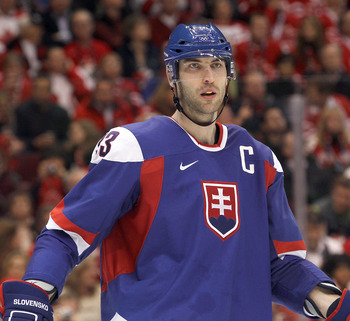
Vancouver, meanwhile, was largely represented by non-Canadian players as well, including their captain and his twin, the Swedish Sedins, German defenseman Christian Ehrhoff, Sami Salo of Finland, and Americans Keith Ballard, Cory Schneider, and Ryan Kesler, to name a few. Both Boston and Vancouver were captained by European players, but the Bruins impact players represented the majority of Canada – literally. The Bruins roster in the finals included Canadians from almost every province: Milan Lucic and Mark Recchi of British Columbia, Ference and Boychuk of Alberta, Shane Hnidy of Saskatchewan, Michael Ryder of Newfoundland, Adam McQuaid of Prince Edward Island, Brad Marchand of Nova Scotia, Patrice Bergeron of Quebec, and a handful of players from Ontario (Recchi, Horton, Seguin, Peverley, Kelly, Campbell, Thornton, and Paille). Furthermore, Patrice Bergeron was a fellow Gold-medal winner in the Vancouver 2010 Olympics along with Roberto Luongo. Bruins coach Julien and President Neely are also Canadians.
No matter how you look at it, the idea of an NHL team belonging to a specific national identity is irrational.
The Bruins of the current 2011-2012 season are a similar mosaic of Canadian players with a few other nationalities thrown in. About 68% of the team is Canadian, 14% American, and 1% each German, Czech, Slovak, and Finnish. Of the Canadian players, 53% are from Ontario, 13% from Quebec and Alberta each, and about 6% each from British Columbia, Nova Scotia, and Prince Edward Island.
The positions played by each player is interesting to note. Only Bruins forwards are from Ontario – the goaltenders are either American or Finnish, and the defensemen are either American, German, Slovak, or Canadians from Alberta or Prince Edward Island. Krejci also remains the lone non-Canadian, European forward.
Since the departure of PJ Axelsson a few seasons ago, the Bruins have yet to put another Swedish player on the roster. The absence of Swedes and Russians and the sparsity of Europeans in general is a unique statistical anomaly for the Bruins. It could perhaps be explained by the fact that the Bruins style of play is physical and rough, which is typically a style of play more exclusive to North American-bred players. The disparity of nationalities on the Bruins roster is definitely worth noting, but doesn’t appear to be negative or overly positive. It just is.
Vancouver, meanwhile, was largely represented by non-Canadian players as well, including their captain and his twin, the Swedish Sedins, German defenseman Christian Ehrhoff, Sami Salo of Finland, and Americans Keith Ballard, Cory Schneider, and Ryan Kesler, to name a few. Both Boston and Vancouver were captained by European players, but the Bruins impact players represented the majority of Canada – literally. The Bruins roster in the finals included Canadians from almost every province: Milan Lucic and Mark Recchi of British Columbia, Ference and Boychuk of Alberta, Shane Hnidy of Saskatchewan, Michael Ryder of Newfoundland, Adam McQuaid of Prince Edward Island, Brad Marchand of Nova Scotia, Patrice Bergeron of Quebec, and a handful of players from Ontario (Recchi, Horton, Seguin, Peverley, Kelly, Campbell, Thornton, and Paille). Furthermore, Patrice Bergeron was a fellow Gold-medal winner in the Vancouver 2010 Olympics along with Roberto Luongo. Bruins coach Julien and President Neely are also Canadians.
No matter how you look at it, the idea of an NHL team belonging to a specific national identity is irrational.
The Bruins of the current 2011-2012 season are a similar mosaic of Canadian players with a few other nationalities thrown in. About 68% of the team is Canadian, 14% American, and 1% each German, Czech, Slovak, and Finnish. Of the Canadian players, 53% are from Ontario, 13% from Quebec and Alberta each, and about 6% each from British Columbia, Nova Scotia, and Prince Edward Island.
The positions played by each player is interesting to note. Only Bruins forwards are from Ontario – the goaltenders are either American or Finnish, and the defensemen are either American, German, Slovak, or Canadians from Alberta or Prince Edward Island. Krejci also remains the lone non-Canadian, European forward.Since the departure of PJ Axelsson a few seasons ago, the Bruins have yet to put another Swedish player on the roster. The absence of Swedes and Russians and the sparsity of Europeans in general is a unique statistical anomaly for the Bruins. It could perhaps be explained by the fact that the Bruins style of play is physical and rough, which is typically a style of play more exclusive to North American-bred players. The disparity of nationalities on the Bruins roster is definitely worth noting, but doesn’t appear to be negative or overly positive. It just is.
Subscribe to:
Comments (Atom)


